


Article by: Melchers Thailand Team
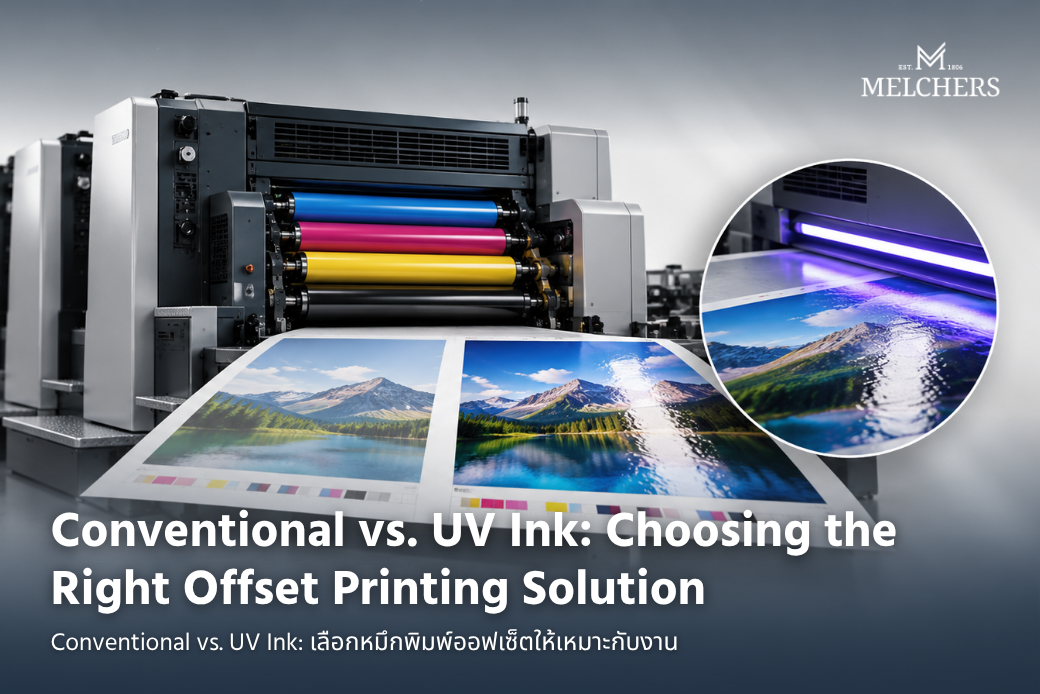
Choosing the right offset printing ink affects print quality, production speed, and the final result. Two common options are Conventional Ink and UV Ink, each with a different drying process and set of applications.
Understanding how they work can help printers select the right solution for their equipment and production needs.
Conventional Offset Printing Ink
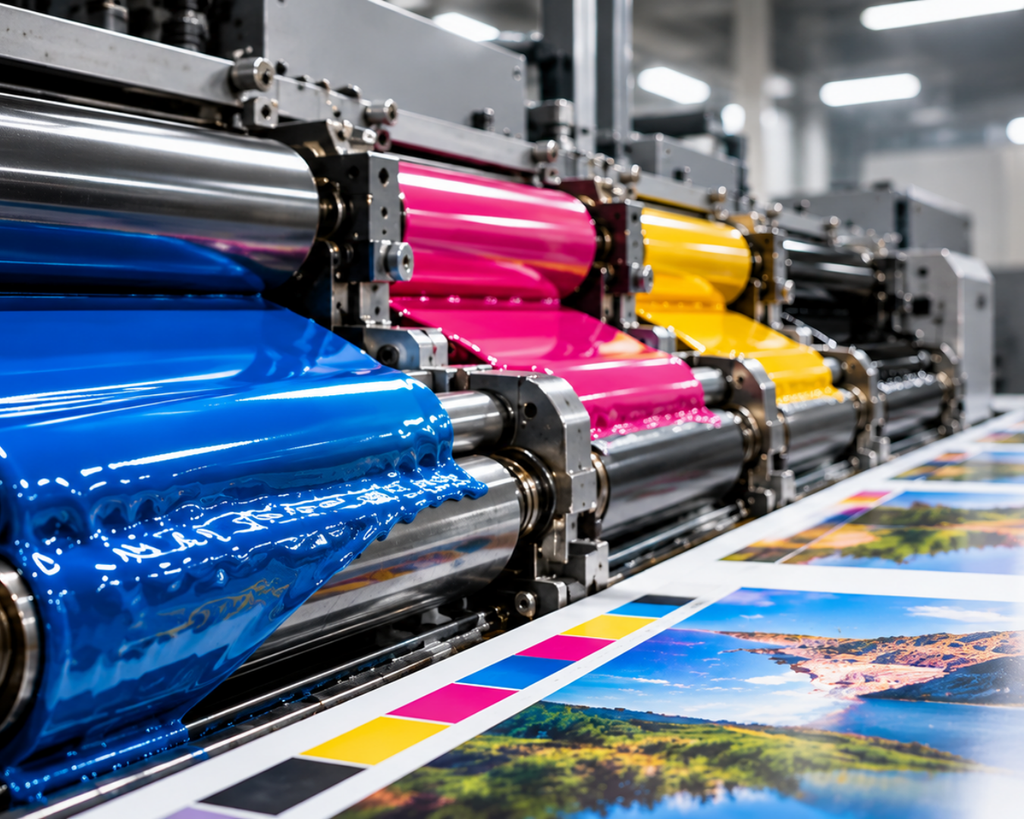
Conventional Offset Printing Ink is typically oil-based and dries through absorption into the paper and oxidation. Since this process takes time, printers need to consider drying time before handling or finishing printed sheets.
This type of ink is widely used for commercial printing, including brochures, catalogues, and magazines.
Ink manufacturers also offer alternative formulations, such as vegetable oil-based ink, soy ink, mineral oil-free ink, and cobalt-free ink. These options may suit specific production requirements and environmental goals, depending on their formulation.
UV Offset Printing Ink
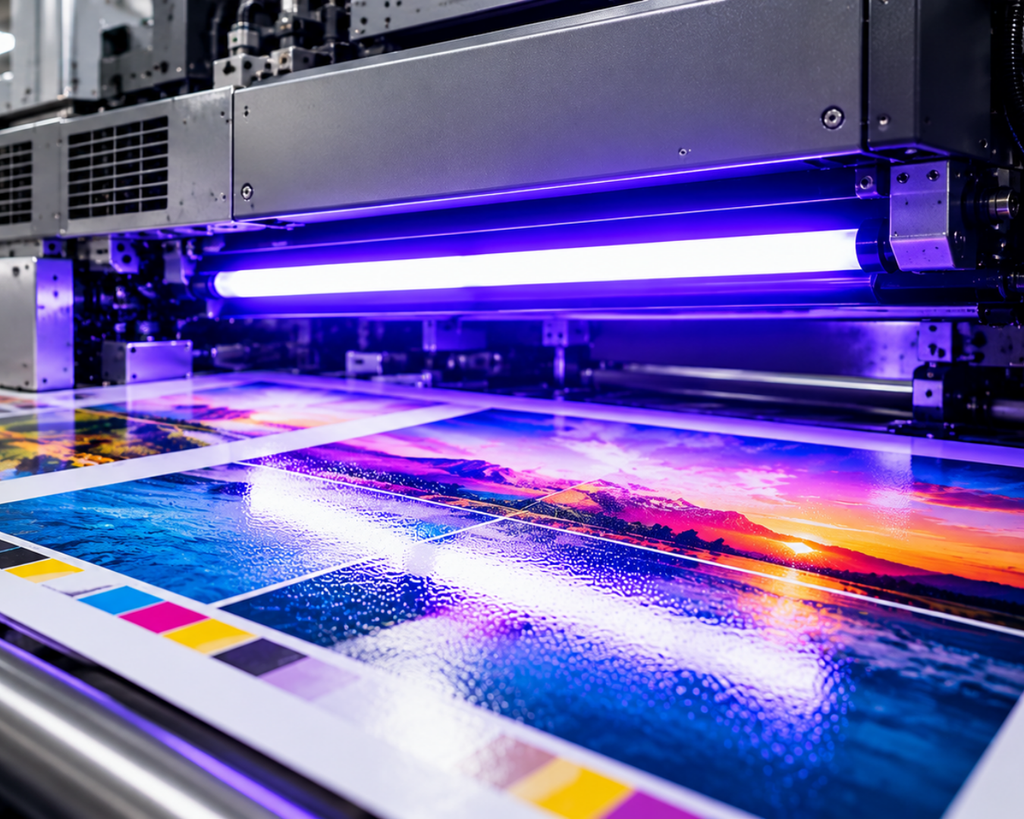
UV Offset Printing Ink cures when exposed to ultraviolet (UV) light through a process called photopolymerization. Unlike conventional ink, it can cure rapidly when used with a compatible UV curing system.
This can reduce waiting time before further handling or finishing. UV curing systems include traditional mercury lamps and LED UV technology, with the appropriate option depending on the ink, printing equipment, and production requirements.
However, UV printing requires compatible ink and curing equipment. The substrate must also be suitable for the selected system.
Conventional vs. UV Ink: Key Differences
The main differences relate to drying, production workflow, and equipment requirements.
- Drying process: Conventional ink dries through absorption and oxidation, while UV ink cures under ultraviolet light.
- Production speed: Conventional ink may require additional drying time. UV ink can cure rapidly, helping reduce waiting time between production stages.
- Equipment: Conventional and UV printing require different ink and drying or curing setups.
- Applications: Conventional ink is widely used for paper-based commercial printing. UV ink may suit applications requiring rapid curing or specific surface performance, provided the materials and equipment are compatible.
Neither option is suitable for every job. The right choice depends on the printing application and production setup.
How to Choose the Right Offset Printing Ink
Before selecting an ink, consider these key factors:
- Application: What type of printed material are you producing?
- Substrate: Is the material compatible with the ink and drying process?
- Production speed: How much drying or curing time can your workflow accommodate?
- Equipment: Does your press support conventional, UV, or LED UV printing?
- Ink formulation: Are there specific performance or material requirements?
Evaluating these factors together helps printers select ink that fits their production needs.
Finding the Right Printing Solution
Conventional and UV offset printing inks each offer advantages for different applications. Conventional ink remains widely used for commercial paper printing, while UV ink offers rapid curing when paired with compatible equipment and materials.
Understanding these differences is an important step toward choosing the right ink for your printing process.
Melchers Thailand supports customers in exploring printing materials and solutions for their applications. Contact our team to learn more about the options available for your printing needs.
16 Oct 2026




 English
  Thai
Thai