


Article by: Michael S. Walsch | Regional Head of Aviation, Asia , Melchers Group
Translate in Thai by: Melchers Thailand Team
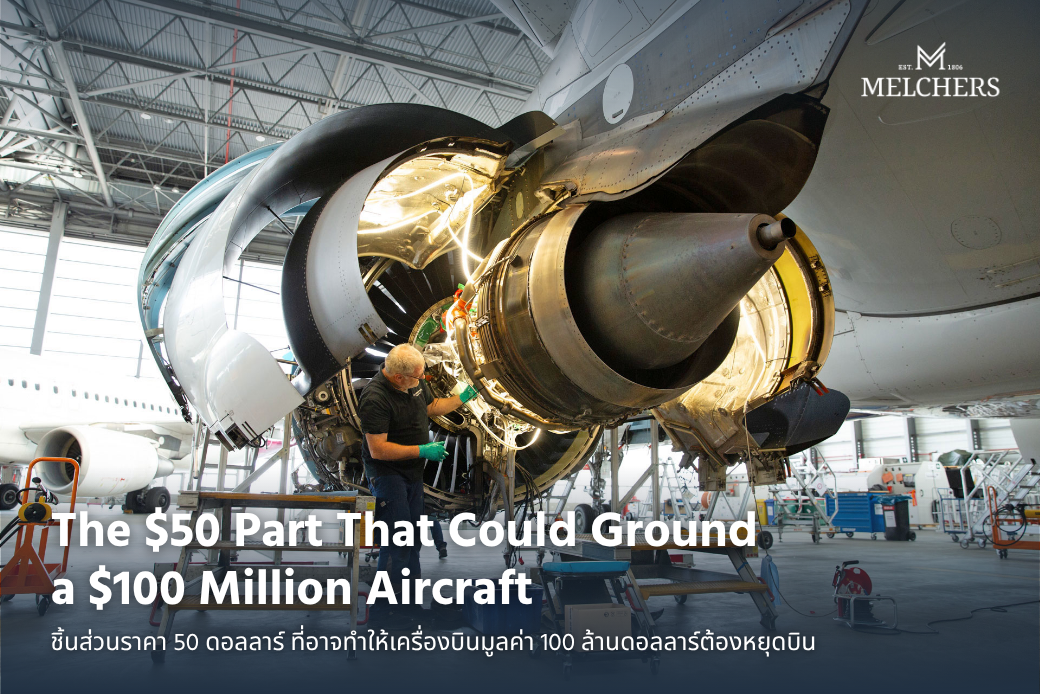
Why the smallest components can create the biggest problems in aviation.
Imagine an aircraft worth more than $100 million sitting at the gate, ready for departure. The passengers are waiting. The crew is ready. The next flight is already scheduled. But the aircraft isn’t going anywhere.
The reason? A small component that might cost less than $50.
It sounds absurd. Yet in aviation, the price of a part and the cost of not having it available can be worlds apart. A missing or unserviceable component can trigger a chain reaction involving maintenance teams, procurement departments, logistics providers and airline operations. What begins as a relatively minor technical issue can quickly become a much larger operational problem.
Welcome to the hidden economics of aircraft maintenance, where even the smallest details can carry enormous consequences.
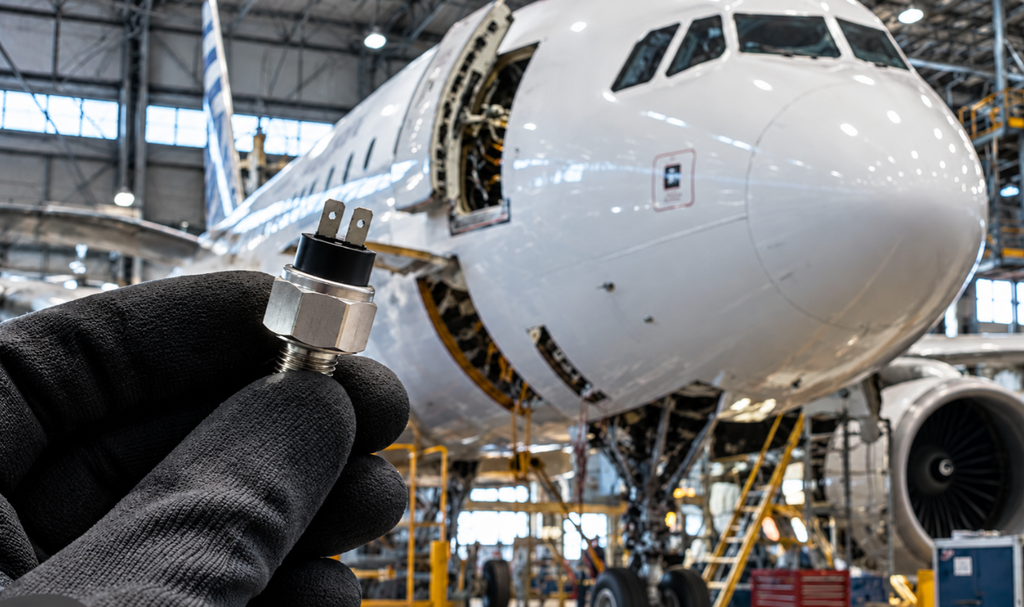
When an Aircraft Stops, the Clock Starts
n aviation, an aircraft unexpectedly unable to operate because of a technical issue may be classified as Aircraft on Ground, commonly known as AOG. For an airline, an AOG situation is more than a maintenance inconvenience. It can disrupt an entire operational schedule.
Consider an aircraft scheduled to operate several flights throughout the day. A technical problem delays its first departure. The next flight may now depart late, connecting passengers could miss their onward journeys, and the airline might need to arrange replacement aircraft, rebook passengers or reorganize crews. The financial consequences can extend far beyond the cost of the original repair.
Of course, not every technical defect grounds an aircraft. Certain items may legally be deferred under approved procedures, such as the operator’s Minimum Equipment List (MEL), provided all applicable conditions are met. But where a defect cannot be deferred, the aircraft must remain on the ground until the necessary maintenance and return-to-service requirements have been satisfied. And that is where the availability of a single component can make all the difference.
The Real Cost Isn’t Always the Part
Aviation procurement departments face an interesting dilemma. On one hand, airlines must manage costs and avoid unnecessarily expensive inventories. On the other, insufficient spare-parts availability can expose their operations to substantial disruption.
Keeping every conceivable replacement component in stock at every airport is neither practical nor economical. Yet relying entirely on parts being available when needed can be equally risky. The challenge is finding the right balance.
This is becoming increasingly important as the global aviation industry faces persistent supply-chain constraints. According to the International Air Transport Association (IATA), aerospace supply-chain bottlenecks were estimated to cost airlines more than US$11 billion in 2025. That figure includes approximately US$3.1 billion in additional maintenance costs, US$2.6 billion in increased engine leasing costs and US$1.4 billion in excess spare-parts inventory costs, alongside higher fuel costs associated with delayed fleet renewal.
These are industry-wide estimates, not costs attributable solely to AOG incidents. Nevertheless, they demonstrate the financial pressure created when aircraft, engines and essential materials are not available as planned.
The lesson is clear: purchasing decisions cannot be based on component prices alone. The true cost of a part must also consider what happens when it isn’t available.
Why Can’t Airlines Simply Use Another Part?
To someone outside aviation, the obvious solution might seem straightforward. If a component is unavailable, why not source an equivalent from another manufacturer?
In aviation, it is rarely that simple. Aircraft components are subject to strict airworthiness, compatibility, traceability and maintenance requirements. A part that looks identical or performs a similar function is not automatically acceptable for installation. The operator and maintenance organization must establish that the component is eligible for the particular aircraft and installation, supported by the applicable approvals and documentation.
This is an essential safeguard. Safety cannot be compromised simply because an aircraft needs to depart on time. However, it also creates an important opportunity. Approved alternative parts, qualified suppliers, reliable documentation and effective sourcing networks can provide airlines with additional options when conventional supply channels are constrained.
The objective is not to bypass established requirements. It is to identify compliant solutions before an urgent operational problem arises.
The Supply Chain Is Part of the Maintenance Strategy
Traditionally, aircraft maintenance and procurement might appear to be separate functions. One repairs the aircraft. The other purchases the materials. In reality, the two are closely connected.
A maintenance team can identify a problem quickly and know exactly how to resolve it. But without the required component, consumable or specialized tool, even the most experienced engineers may be unable to complete the task. Likewise, procurement teams can negotiate excellent purchasing conditions, but those savings may lose their significance if an essential item arrives too late.
Successful maintenance operations therefore depend on more than technical expertise. They require coordination between engineering, planning, purchasing, logistics and suppliers.
For airlines and Maintenance, Repair and Overhaul (MRO) organizations operating across Asia, this can be particularly challenging. Parts may need to cross international borders, navigate customs procedures and reach maintenance facilities within demanding operational windows. In these situations, supplier responsiveness, documentation quality and local market knowledge can be just as valuable as competitive pricing.
From Lowest Price to Lowest Operational Risk
Does this mean airlines should simply buy more spare parts? Not necessarily.
The smarter approach is to understand which materials and components create the greatest operational exposure. A relatively inexpensive item with a long replenishment lead time may deserve more attention than a costly component that can be sourced quickly from multiple qualified suppliers.
Historical consumption, aircraft fleet composition, supplier performance, lead times and operational criticality all play a role. Better forecasting, strategic stock positioning, supplier diversification and access to approved alternatives can help airlines improve resilience without carrying unlimited inventory.
This requires a change in perspective. Rather than asking only, “How much does this part cost?”, operators should also ask: “What would it cost us if this part were unavailable tomorrow?”
That is a very different purchasing conversation.
Why Regional Partnerships Matter
For more than 160 years, Melchers has built its business around connecting international manufacturers with local markets. Today, that approach also plays an important role in aviation.
Through its regional aviation activities in Asia, Melchers supports airlines and MRO organizations with access to specialized products, maintenance tooling, aircraft components and technical solutions from international manufacturers.
The value of such partnerships extends beyond supplying products. Understanding local operational requirements, facilitating communication with manufacturers, coordinating technical inquiries and identifying suitable sourcing options can help customers make better-informed decisions.
Not every technical problem can be solved immediately, and no supplier can eliminate all operational disruption. But strong relationships, reliable information and early planning can make a meaningful difference when time is critical.
A Small Part. A Much Bigger Picture.
The next time you board an aircraft, consider the extraordinary coordination required to make that flight possible. Behind the scenes are thousands of components, carefully planned maintenance activities, specialized tools and an international network of suppliers.
Most passengers will never notice any of them. And that is exactly how it should be.
Because in aviation, operational excellence often comes down to ensuring that the smallest things never become the biggest problems.
Sometimes, the difference between an aircraft flying and remaining on the ground is not a multimillion-dollar engine. It is having the right $50 part, in the right place, at the right time.
Coming next in Aviation Insights – Part 2: Repair, Don’t Replace: The Changing Economics of Aircraft Maintenance.
How advanced repair technologies, specialized tooling and smarter maintenance strategies are creating new opportunities to extend component service life and reduce unnecessary replacement.
30 Oct 2026




 English
 Thai